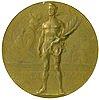
To be able to look up Olympic data easier, Athens Info Guide
has put together the most important facts per Olympic Games
city. You can consult these facts by selecting the Olympic
Summer or Winter Games city below.
The
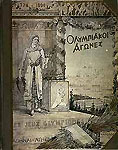
revival of the ancient Olympics attracted athletes
from 14 nations, with the largest delegations coming
from Greece, Germany, France and Great Britain. On
6 April 1896, the American James Connolly won the triple
jump to become the first Olympic champion in more than
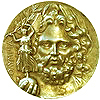
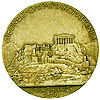
1.500 years. Winners were awarded a silver medal and
an olive branch. The German athlete Carl Schumann finished
in the top five events of three different sports. The
people of Athens greeted the Games with great enthusiasm.
Their support was rewarded when a Greek shepherd, Spyridon
Louis, won the most popular event, the marathon.
Year
Location
Dates
Participating
Countries
Number
of
Sports
Number
of
Events
Number
of
Athletes
Male
Athletes
Female
Athletes
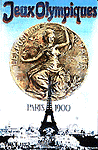
1900
Paris
France
14
May
28 Octobrer
24
18
95
997
975
22
Emblem
Mascot
Torch
Poster
None
None
None
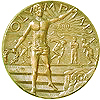
The
Games of 1900 were held in Paris as part of the Exposition
Universelle Internationale, the Paris World’s
Fair. The exposition organizers spread the events over
five months and de-emphasized their Olympic status
to such an extent that many athletes died without ever
knowing that they had participated in the Olympics.
Women made their first appearance in the modern Games.
The first to compete were Mme. Brohy and Mlle. Ohnier
of France in croquet. The first female champion was
in tennis: Charlotte Cooper of Great Britain. Tennis
was one of five sports in which athletes from different
nations competed on the same team. The others were
football, polo, rowing and tug of war. Alvin Kraenzlein
won four athletics events in three days and, on 16
July, Ray Ewry, who had overcome childhood polio, won
three championships in one day, all in the standing
jump events.
Year
Location
Dates
Participating
Countries
Number
of
Sports
Number
of
Events
Number
of
Athletes
Male
Athletes
Female
Athletes
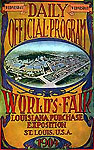
1904
St.-Louis
USA
1
July
23 November
12
17
91
651
645
6
Emblem
Mascot
Torch
Poster
None
None
None
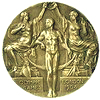
The
1904 St. Louis Olympics organizers repeated all of
the mistakes of 1900. The Olympic competitions, spread
out over four and a half months, were lost in the chaos
of a World’s Fair. Of the 94 events generally
considered to have been part of the Olympic program,
only 42 included athletes who were not from the United
States. The 1904 Olympics did have a few highlights.
They were the first at which gold, silver and bronze
medals were awarded for first, second and third place.
Boxing and freestyle wrestling made their debuts. Marathon
runners Len Tau and Jan Mashiani, Tswana tribesmen,
who were in St. Louis as part of the Boer War exhibit
at the World’s Fair, became the first Africans
to compete in the Olympics. One of the most remarkable
athletes was the American gymnast George Eyser who
won six medals even though his left leg was made of
wood. Chicago runner James Lightbody won the steeplechase
and the 800m and then set a world record in the 1.500m.
Year
Location
Dates
Countries
Sports
Events
Athletes
Male
Athletes
Female
Athletes
1908
Lonndon
England
27
April
31 October
22
22
110
2008
1971
37
Emblem
Mascot
Torch
Poster
None
None
None
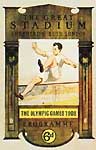
The
1908 Olympics were originally awarded to Rome but were
reassigned to London. At the Opening Ceremony, the
athletes marched into the stadium by nation as most
countries sent selected national teams. Archers William
and Charlotte Dod became the first brother and sister
medalists. Oscar Swahn, aged 60, was the oldest competitor
ever to earn an Olympic gold medal, winning the running
deer shooting, single shot. 1908 marked the first appearance
of diving and field hockey. In the spirit of sportsmanship,
the final in middleweight Greco-Roman wrestling between
Frithiof Martensson and Mauritz Andersson was postponed
one day to allow Martensson to recover from a minor
injury. Martensson won. Ray Ewry won the standing high
jump and the standing long jump for the third time
and became the only person in Olympic history to win
a career total of eight gold medals in individual events.
The event that caught the public imagination around
the world was the dramatic ending of the marathon.
After 42 kilometers (26 miles) of running, the first
man to enter the stadium was Dorando Pietri of Italy
but he collapsed on the track five times and was disqualified
when officials carried him across the finish line.
Year
Location
Dates
Countries
Sports
Events
Athletes
Male
Athletes
Female
Athletes
1912
Stockholm
Sweden
5
May
27 July
28
14
102
2407
2359
48
Emblem
Mascot
Torch
Poster
None
None
None
Held
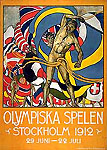
in Stockholm, the 1912 Olympics were a model of efficiency.
The Swedish hosts introduced the use of unofficial
electronic timing devices for the track events as well
as the first use of a public address system. The modern
pentathlon was added to the Olympic program. Women's
events in swimming and diving were also introduced.
Sweden would not allow boxing contests to be held in
their country. After the Games, the International Olympic
Committee decided to limit the power of host nations
in deciding the Olympic program. If there was an unofficial
theme of the 1912 Games, it was endurance. The course
for the cycling road race was 320km (199 miles), the
longest race of any kind in Olympic history. In Greco-Roman
wrestling, the middleweight semifinal match between
Russian Martin Klein and Finland’s Alfred Asikainen
lasted eleven hours. Hannes Kohlemainen of Finland
won three gold medals in long-distance running. The
most popular hero of the 1912 Games was Jim Thorpe
of the United States. Thorpe won pentathlon and shattered
the world record in decathlon. One member of the Austrian
team that finished second in the team saber fencing
event was Otto Herschmann who, at that time, was president
of the Austrian Olympic Committee. Herschmann is the
only sitting National Olympic Committee president to
win an Olympic medal.
Year
Location
Dates
Countries
Sports
Events
Athletes
Male
Athletes
Female
Athletes
1920
Antwerp
Belgium
20
April
12 September
29
29
22
154
2626
65
Emblem
Mascot
Torch
Poster
None
None
None
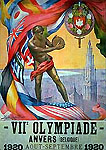
The
1916 Olympics were scheduled to be held in Berlin but
were canceled because of what came to be known as World
War I. The 1920 Games were awarded to Antwerp to honor
the suffering that had been inflicted on the Belgian
people during the war. The Opening Ceremony was notable
for the introduction of the Olympic flag and the presentation
of the Athletes’ Oath. In a performance unequaled
in Olympic history, Nedo Nadi of Italy earned gold
medals in five of the six fencing events. Ethelda Bleibtrey
of the United States won gold medals in all three women’s
swimming contests. Including preliminary heats, she
swam in five races and broke the world record in every
one. France’s Suzanne Lenglen dominated women’s
tennis singles so completely that she lost only four
games in the ten sets she played. At age 72, Swedish
shooter Oscar Swahn earned a silver medal in the team
double-shot running deer event to become the oldest
medalist ever. The 1920 12-foot dinghy sailing event
was the only event in Olympic history to be held in
two countries. The first race was staged in Belgium
but the last two races took place in the Netherlands
because both entrants were Dutch.
Year
Location
Dates
Countries
Sports
Events
Athletes
Male
Athletes
Female
Athletes
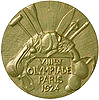
1924
Paris
France
4
May
27 July
44
17
126
3089
2954
135
Emblem
Mascot
Torch
Poster
None
None
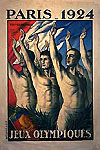
At
the 1924 Paris Games, the Olympic motto,
"Citius, Altius, Fortius", (faster, higher, stronger)
was introduced as well as the Closing Ceremony ritual of
raising three flags: the flag of the International Olympic
Committee, the flag of the host nation and the flag of
the next host nation. The number of participating nations
jumped from 29 to 44, signaling widespread acceptance of
the Olympics as a major event. There also was the presence
of 1.000 journalists. Women’s fencing made its debut
and Ellen Osiier of Denmark earned the gold medal without
losing a single bout. Johnny Weissmuller of the United
States won two gold medals in swimming on 20 July alone.
That same day he earned a bronze medal in water polo. He
later went to Hollywood and starred as Tarzan in twelve
movies. American swimmer Gertrude Ederle won a bronze medal
in the 100m freestyle. Two years later she caused a sensation
by becoming the first woman to swim across the English
Channel (La Manche) two hours faster than any man had ever
achieved. Finnish runner Paavo Nurmi won five gold medals
to add to the three he had won in 1920. His most spectacular
performance occurred on 10 July. First he easily won the
1.500m. Then, only 55 minutes later, he returned to the
track and won the 5.000m. Nurmi’s teammate, Ville
Ritola, did not do badly either in 1924. He won four gold
medals and two silver.
Year
Location
Dates
Countries
Sports
Events
Athletes
Male
Athletes
Female
Athletes
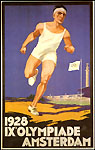
1928
Amsterdam
Holland
17
May
12 August
46
14
109
2883
2606
277
Emblem
Mascot
Torch
Poster
None
None
None
The
Amsterdam Olympics of 1928 were held in an atmosphere
of peace and harmony that preceded twenty years of
economic uncertainty and war. Perhaps the Games were
best exemplified by the experience of Australian rower
Henry Pearce. Midway through his quarterfinal race,
he stopped rowing to allow a family of ducks to pass
single file in front of his boat. Pearce won the race
anyway and, later, the gold medal as well. At the Opening
Ceremony, the team from Greece led the Parade of Nations
and the host Dutch team marched in last. Greece first,
hosts last would become a permanent part of the Olympic
protocol. Athletes from 28 different nations won gold
medals in Amsterdam, a record that would last for 40
years. The number of female athletes more than doubled
as women were finally allowed to compete in gymnastics
and athletics. For the first time, Asian athletes won
gold medals. Mikio Oda of Japan won the triple jump
while his teammate, Yoshiyuki Tsuruta, won the 200m
breaststroke. Meanwhile the team from India was victorious
in field hockey. Between 1928 and 1960, Indian teams
won six straight gold medals. Another winning streak
began in 1928. Hungary earned the first of seven consecutive
gold medals in team saber fencing.
Year
Location
Dates
Countries
Sports
Events
Athletes
Male
Athletes
Female
Athletes
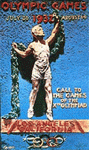
1932
Los
Angeles
USA
30
July
14 August
37
14
117
1332
1206
126
Emblem
Mascot
Torch
Poster
None
None
Because
the 1932 Olympics were held in the middle of the Great
Depression, half as many athletes took part as had
in 1928. Nevertheless, 18 world records were either
broken or equaled. Over 100.000 people attended the
Opening Ceremony. The 1932 Olympics were the first
to last 16 days. The duration of the Olympics has remained
between 15 and 18 days ever since. Between 1900 and
1928, no Summer Olympics was shorter than 79 days.
For the first time, the male athletes were housed in
a, Olympic Village. The women stayed in a luxury hotel.
At the victory ceremonies, the medal winners stood
on a victory stand and the flag of the winner was raised.
Official automatic timing was introduced for the track
events as was the photo-finish camera. 14-year-old
Japanese Kusuo Kitamura won the 1.500m freestyle to
become the youngest male in any sport ever to earn
a gold medal in an individual event. 21-year-old American
Babe Didrikson qualified for all five women’s
track and field events but was only allowed to compete
in three. In the spirit of fair play, British fencer
Judy Guinness gave up her hopes for a gold medal when
she pointed out that officals had not noticed two touches
scored against her by her final opponent, Ellen Preis
of Austria.
Year
Location
Dates
Countries
Sports
Events
Athletes
Male
Athletes
Female
Athletes
1936
Berlin
Germany
1-16
August
49
19
129
3963
2632
331
Emblem
Mascot
Torch
Poster
None
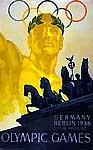
The
1936 Olympics, held in Berlin, are best remembered
for Adolf Hitler’s failed attempt to use them
to prove his theories of Aryan racial superiority.
As it turned out, the most popular hero of the Games,
was the African-American sprinter and long jumper Jesse
Owens who won four gold medals. 1936 saw the introduction
of the torch relay in which a lighted torch is carried
from Olympia to the site of the Games. Basketball,
canoeing and team handball made their first appearances,
while polo was included in the Olympic program for
the last time. Thirteen-year-old Marjorie Gestring
of the United States won the gold medal in springboard
diving. She remains the youngest female gold medalist
in the history of the Summer Olympics. Inge Sorensen
of Denmark earned a bronze medal in the 200m breaststroke
at the age of 12, making her the youngest medalist
ever in an individual event. Hungarian water polo player
Olivier Halassy won his third medal despite the fact
that one of his legs had been amputated below the knee
following a streetcar accident. Rower Jack Beresford
of Great Britain won a gold medal in the double sculls
event, marking the fifth Olympics at which he earned
a medal.
Year
Location
Dates
Countries
Sports
Events
Athletes
Male
Athletes
Female
Athletes
1948
London
England
29
July
14 August
59
17
136
4101
3714
390
Emblem
Mascot
Torch
Poster
None
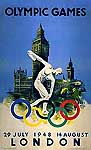
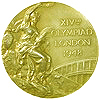
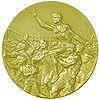
The
1948 London Games were the first to be shown on home
television although very few people in Great Britain
actually owned sets. A women’s canoeing event
was held for the first time. 17-year-old American Bob
Mathias won the decathlon only four months after taking
up the sport. He is the youngest athlete in Olympic
history to win a men’s athletics event. Two athletes
who were Olympic champions in 1936 managed to defend
their titles twelve years later. They were Ilona Elek
of Hungary in women’s foil fencing and Jan Brzak
of Czechoslovakia in the canoeing Canadian pairs 1.000m.
Fanny Blankers-Koen of the Netherlands was the world
record holder in six events but, according to the rules
of the day, was only allowed to enter four. She won
all four.
Year
Location
Dates
Countries
Sports
Events
Athletes
Male
Athletes
Female
Athletes
1952
Helsinki
Finland
19
July
3 August
69
17
149
4955
4436
519
Emblem
Mascot
Torch
Poster
None
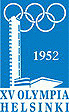
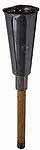
The
1952 Olympic Games in Helsinki started in spectacular
fashion with Pavo Nurmi, then aged 55, entering the
stadium with the Olympic flame and lighting the cauldron
on the ground. Then, young football players carried
the torch up to the top of the stadium tower where
another Olympic cauldron was lit by 62-year-old Hannes
Kolehmainen. Emil Zatopek of Czechoslovakia, became
the only person in Olympic history to win the 5.000,
10.000 and marathon at the same Olympics. The Soviet
Union entered the Olympics for the first time. The
Soviet women gymnasts won the team competition easily,
beginning a streak that would continue for forty years
until the Soviet Union broke up into separate republics.
One of the first women allowed to compete against men
in the equestrian dressage was Lis Hartel of Denmark.
Despite being paralyzed below the knees after an attack
of polio, Hartel, who had to be helped on and off her
horse, won a silver medal.
Year
Location
Dates
Countries
Sports
Events
Athletes
Male
Athletes
Female
Athletes
1956
Melbourne
Australia
Stockholm
Sweden
22
November
8 December
10-17 Juni
72
17
145
3314
2938
376
Emblem
Mascot
Torch
Poster
None
Australian
quarantine laws were too severe to allow the entry
of foreign horses so the equestrian events were held
separately in Stockholm in June. The Melbourne Games
were the first to be held in the southern hemisphere.
Two athletes dominated the gymnastics competition.
On the men’s side, Ukrainian Viktor Chukarin
earned five medals, Agnes Keleti of Hungary brought
her career total to ten medals by winning four gold
medals and two silver. Prior to 1956, the athletes
in the Closing Ceremony marched by nation as they did
in the Opening Ceremony. In Melbourne, following a
suggestion by John Ian Wing, a young Australian ,the
athletes entered the stadium together during the Closing
Ceremony as a symbol of global unity.